
Alice vs. Wonderland's Logic
Alice's Adventures in WonderlandAlice constantly struggles against the nonsensical rules and reasoning of Wonderland, from the Caterpillar's contradictions to the trial's absurdities.
increasing Bearing strength in each event
 decreasing
Bearing strength in each eventdecreasingThe Caterpillar's Contradictions
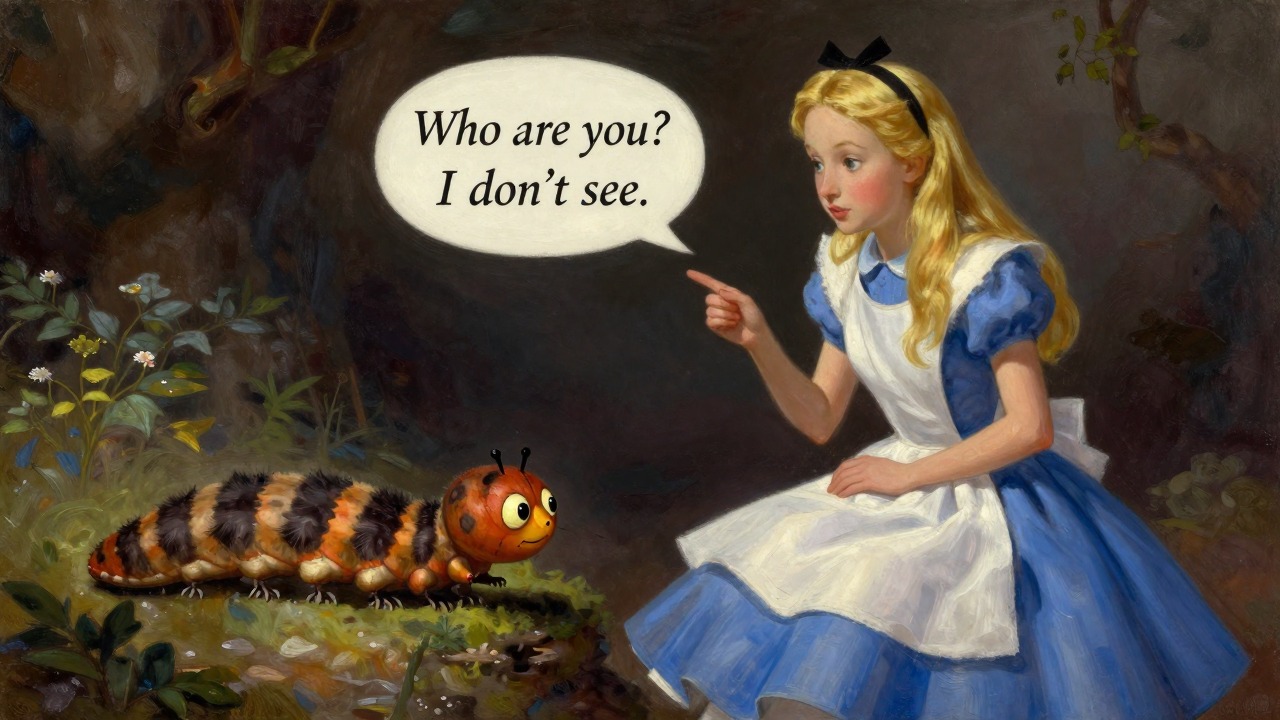
A Battle of Wits
The Caterpillar's Cross-Examination
The Caterpillar's interrogation of Alice is a battle of logic. He asks "Who are you?" and refuses to accept her confusion. When Alice says she cannot explain because she is not herself, the Caterpillar says, "I don't see." This refusal to acknowledge her predicament frustrates Alice. The Caterpillar's short, blunt responses are a form of logical aggression, designed to unsettle her.
The Recitation Test
The Caterpillar's demand that Alice recite "You are old, Father William" is a test of her identity. When she gets it wrong, he declares it wrong from beginning to end. This is a direct challenge to her sense of self. Alice's failure to recite correctly reinforces her feeling that she has lost her former knowledge. The Caterpillar's logic is inflexible and unyielding, forcing Alice to confront the instability of her own mind.
The Mad Tea-Party's Rules
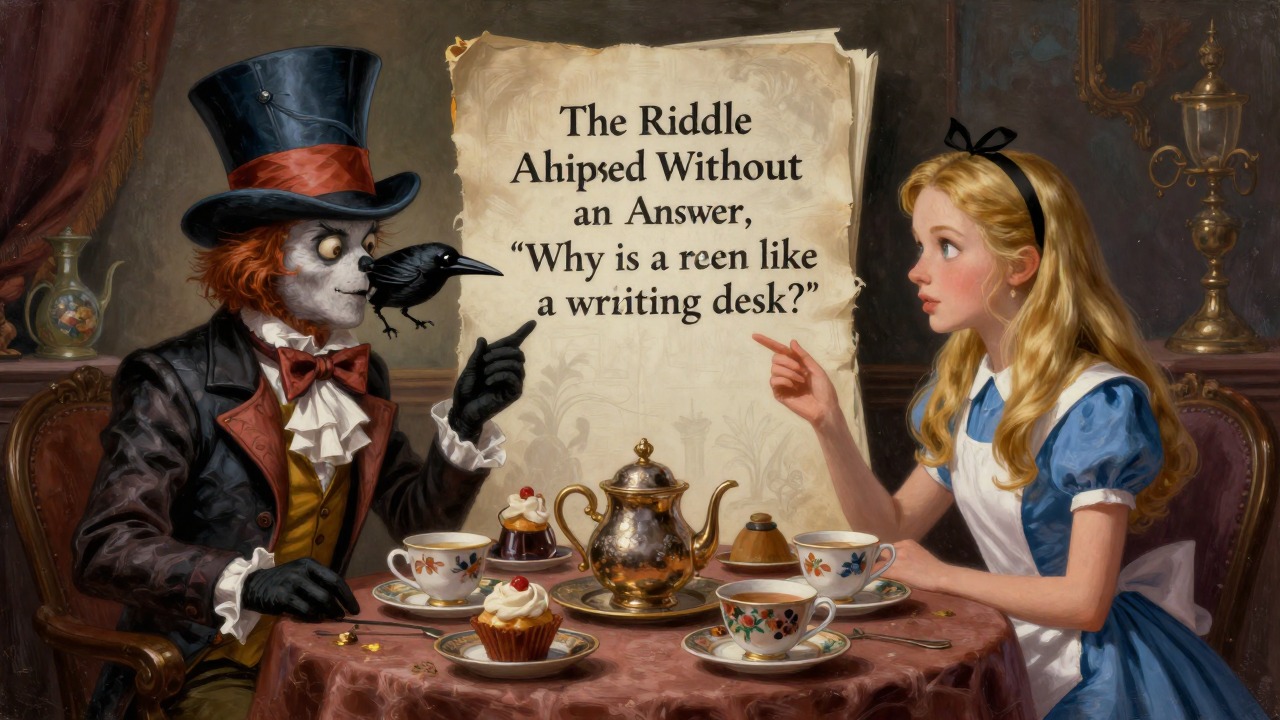
A World of Nonsense
The Riddle Without an Answer
The Hatter's riddle "Why is a raven like a writing-desk?" has no answer, yet the Hatter asks it as if it were a serious question. When Alice gives up, the Hatter admits he doesn't know either. This reveals that the rules of the tea-party are arbitrary; the point is not to solve the riddle but to engage in the game of absurdity.
The Logic of Time
The Hatter's explanation that Time is a person who refuses to do his bidding is a logical absurdity. Alice tries to apply her own understanding of time, but the Hatter's logic is internally consistent within Wonderland. The tea-party's rules—shifting seats, endless tea, and nonsensical stories—are a microcosm of Wonderland's broader rejection of conventional logic. Alice's attempts to reason with the Hatter and March Hare fail because they operate on a different system of logic.
The Trial's Absurdity
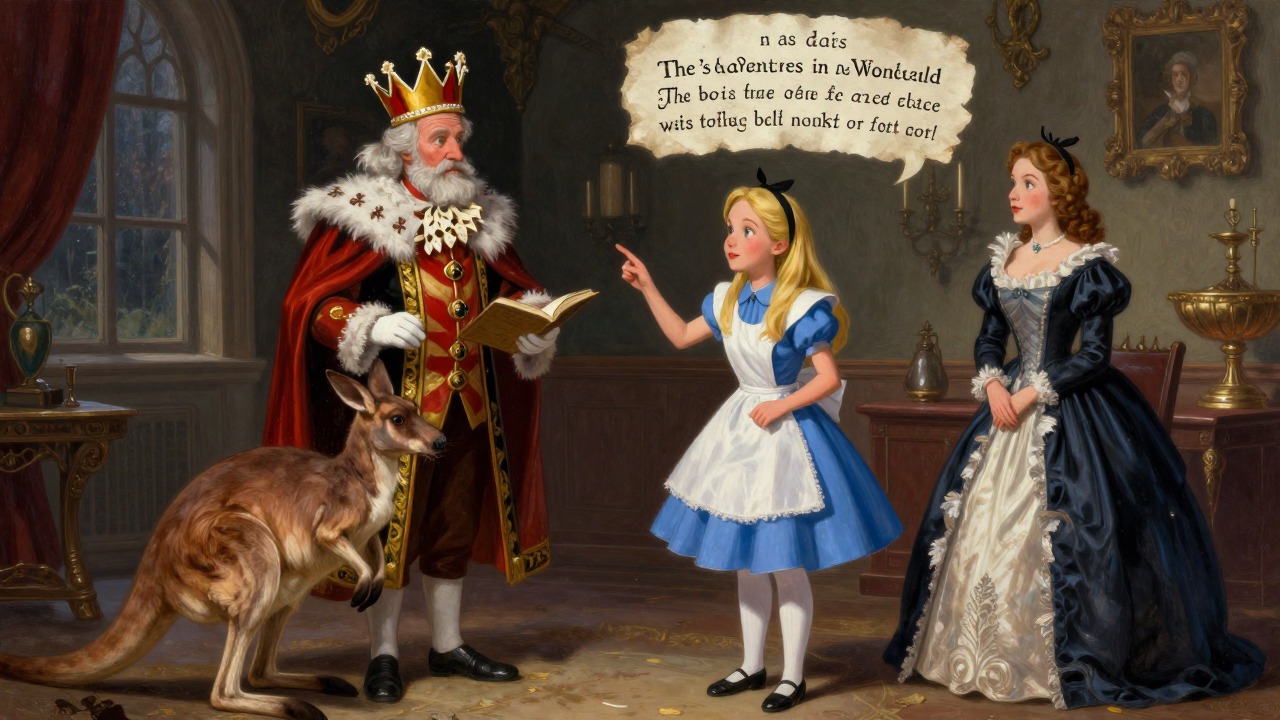
A Kangaroo Court
The King's Misinterpretations
The King's interpretation of the verses is a masterpiece of flawed logic. He takes every phrase as evidence of guilt, even when the meanings are unclear. Alice points out that the verses have no meaning, but the King insists on finding one. The Queen's demand for "Sentence first—verdict afterwards" is the ultimate violation of legal logic.
Alice's Defiance
Alice's final argument—that the court is nothing but a pack of cards—is a logical conclusion based on her observation of the absurd proceedings. She refuses to accept the court's authority because it is founded on nonsense. This confrontation is the climax of her struggle against Wonderland's logic. By asserting her own rationality, she breaks the spell of the dream world.
at the mushroom, with the Caterpillar
at the Mad Tea-Party
during the trial, near the end
